
Skip to content

Good to know

Stress Coping Strategies: How We Respond to Pressure and Crises

Author: The Tester.lt team

Why do some people leap into action under stress while others delay work or turn on themselves? Learn the four coping strategies and take the free stress coping test.

Key takeaways

  • Stress coping strategies are the conscious and automatic ways of thinking and behaving that people use when facing pressure, change, or crisis.
  • Psychology distinguishes constructive directions (problem-solving, emotion regulation) from less adaptive ones (avoidance, self-criticism).
  • Effective stress management rests on flexibility: when you can change the situation, active planning works best; with uncontrollable events, emotional acceptance is essential.
  • Chronic exhaustion usually comes not from the external event itself, but from staying stuck in a cycle of avoidance or self-attack.
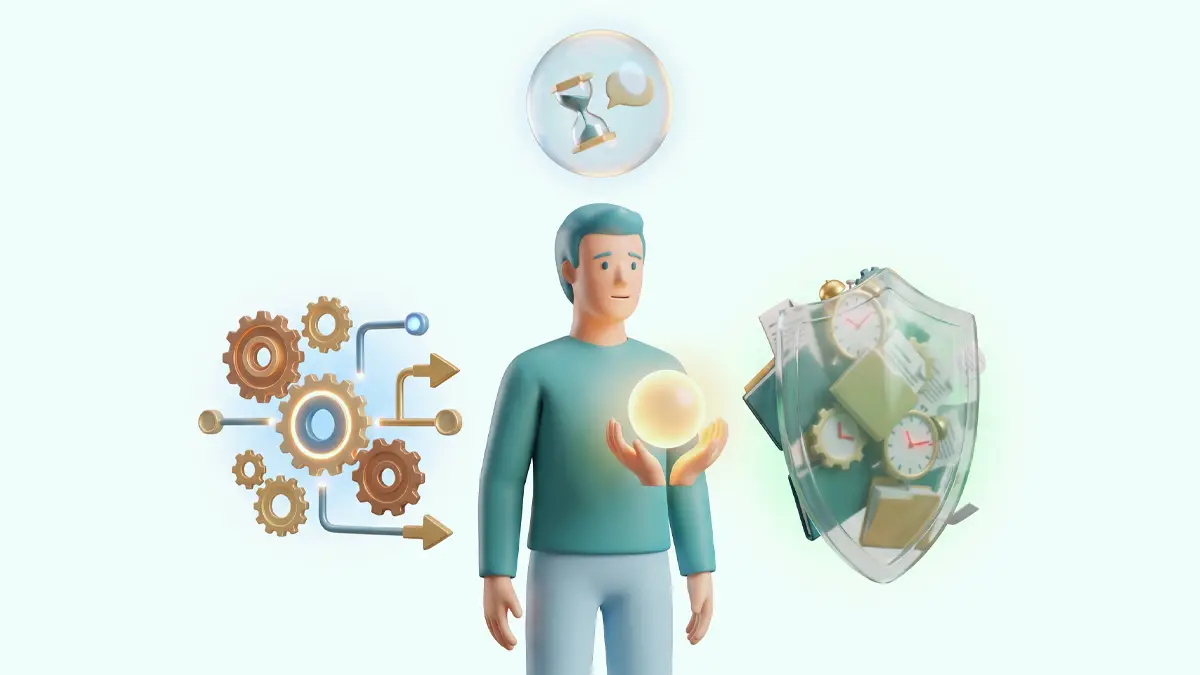
Person holding a glowing orb between gears, a shield with clocks, and an hourglass — stress coping strategies

Faced with the same difficult situation — an unexpected organisational change at work, or financial pressure — people behave in completely different ways. Some sit down at a spreadsheet and build an action plan; others call a close friend to talk it through; others shut the laptop and put on a series; still others spend a sleepless night analysing their mistakes. In psychology these patterns of thought and behaviour are called stress coping strategies. Understanding how you automatically respond to pressure is the first step toward protecting your nervous system from emotional burnout .

How the brain appraises strain: Dr. R. Lazarus and Dr. S. Folkman’s model

Psychologists Dr. Richard Lazarus and Dr. Susan Folkman, who formulated the classic theory of stress and coping, showed that between an external event and the stress we feel there is always a cognitive (thought) appraisal. In an instant the brain runs a two-stage analysis:

  • Primary appraisal. The person evaluates the situation itself: does this event threaten me, is it a loss, or might it be a manageable challenge?
  • Secondary appraisal. The brain weighs available internal and external resources: do I have enough time, knowledge, energy, and support to handle this?

Stress arises when the threat or demands exceed the resources a person believes they have. The psyche then automatically switches on one of its usual coping strategies to reduce inner tension and restore balance. If that reaction repeats for months on end, it often becomes chronic stress — you can read more about it and the stress level test .

Four main stress coping directions

Drawing on the research of Dr. R. Lazarus and Dr. Charles Carver, people’s reactions to crises and pressure can be grouped into four main directions. The first two are generally seen as constructive, while the other two carry longer-term risk — yet each has its own nuances.

1. Rational problem-solving

  • How it shows up: all energy goes into changing the external situation. The person analyses facts calmly, seeks extra information, breaks the problem into stages, and takes direct steps to remove the obstacle.
  • Impact: this is the most productive strategy in work and everyday situations because it quickly restores a sense of control. Trouble starts when the same method is applied to uncontrollable events, or when constant action completely ignores physical fatigue and emotions.

2. Emotion regulation and seeking support

  • How it shows up: attention goes to stabilising the inner state. The person shares feelings with people close to them, tries to see the situation from a wider perspective, or uses physiological calming methods — physical activity, breathing exercises, time in nature.
  • Impact: this direction helps reduce emotional load and accept a difficult reality. But if someone only talks about feelings and never takes the practical steps the situation requires, the problem stays stuck.

3. Avoidance and emotional withdrawal

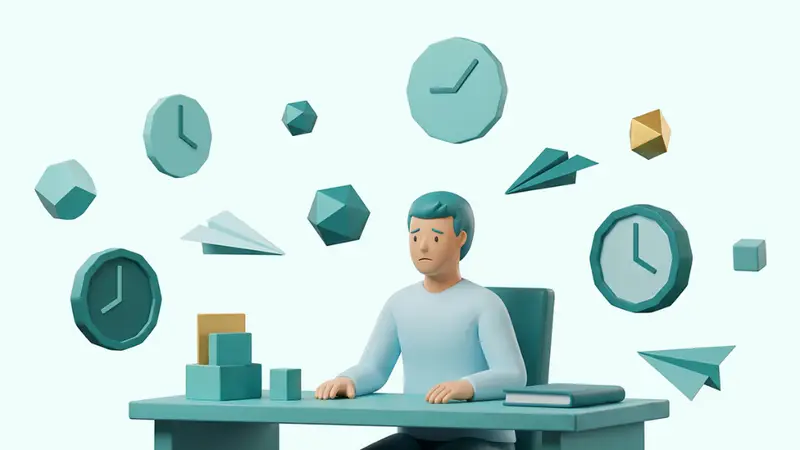
  • How it shows up: faced with heavy load or an unpleasant task, the person tries to distance themselves. That may mean putting work off (procrastination) , diverting attention into phone scrolling, games, series, or snacking — hoping the situation will resolve itself.
  • Impact: in the short term avoidance lowers anxiety, but over time it becomes a main source of chronic stress. Unresolved problems pile up, deadlines press in, and rest no longer restores because background worry never fully leaves.

4. Self-criticism and inner pressure

  • How it shows up: in a crisis or after a mistake, the person turns all tension inward. Self-blame begins, accusations of incompetence, catastrophic scenarios, and forcing maximal results out of oneself. These cycles are often fed by cognitive thinking traps .
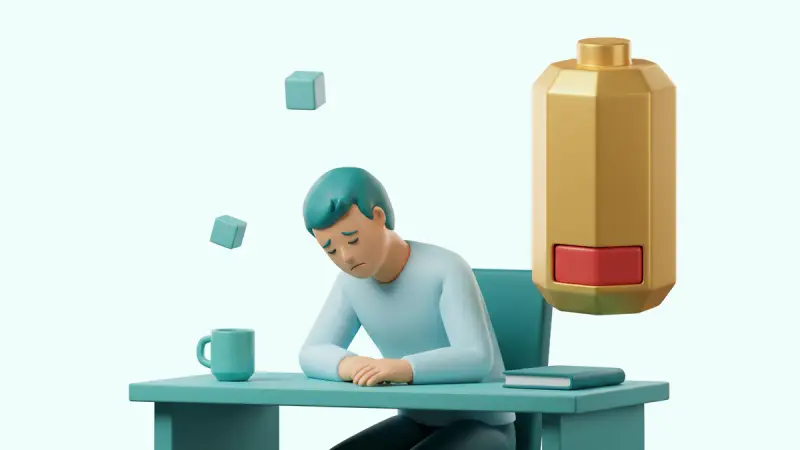
  • Impact: this is the reaction that most depletes the nervous system. When the inner critic uses fear and pressure, the brain releases even more stress hormones (cortisol and adrenaline), which block working memory and lead straight toward emotional burnout. Overthinking works similarly — thoughts spin in a loop without a decision.
Why flexibility matters more than a single strategy

Contemporary psychology emphasises what is called coping flexibility. No constructive strategy is universal for every life situation.

The most successful stress management depends on recognising how much of the situation is under your control. When you face a controllable problem (for example missing skills to finish a project, or a misunderstanding with a colleague), problem-solving works best — learning, planning, and a direct conversation. Faced with uncontrollable events (a loved one’s illness, economic shifts, or a past mistake already made), trying at all costs to “fix” the situation leads to exhaustion. In those cases you need to shift to emotion regulation and accepting reality.

How to build healthy stress resilience in everyday life

Although the first reaction to stress is often automatic, the habits you use under pressure can be changed step by step:

  • Split the problem into controllable and uncontrollable parts. When tension feels paralysing, take a sheet of paper and draw two columns. Direct attention first only to the concrete steps you can take today, and leave the rest.
  • Interrupt avoidance with the five-minute rule. If you notice stress making you delay an important task, do not set a goal to finish everything at once. Agree with yourself to work on it for only five minutes. Once you start, the brain’s resistance and fear naturally ease.
  • Replace self-criticism with objective analysis. When after a setback the thought “I can’t cope” appears, reframe it as a constructive question: “What specific information or help do I need right now to move forward?”
  • Include physiological stress discharge. Stress is a biological response that prepares the body for physical action. So that stress hormones do not linger, you need regular movement, quality sleep, and slow, deep breathing practices.

It also matters to recognise the point where ordinary stress-management methods are no longer enough. If chronic tension lasts for months, brings ongoing insomnia, panic attacks, digestive or heart symptoms, and complete apathy, see a doctor or a mental-health professional.

Want to know which stress coping strategy is dominating your life right now? Take the free stress coping strategies test . After 16 statements you will see your four-scale profile and get practical recommendations.

Sources

  • Lazarus, R. S., & Folkman, S. (1984). Stress, appraisal, and coping. Springer Publishing Company.
  • Carver, C. S. (1997). You want to measure coping but your protocol’s too long: Consider the Brief COPE. International Journal of Behavioral Medicine, 4(1), 92–100.
Adult ADHD test: illustration of attention and hyperactivity symptoms
Psychology

ADHD in Adults: Symptoms, Causes, and How to Recognise It

Adult ADHD can hide behind dozens of open tabs, unfinished projects, and constantly misplaced keys. Learn the main signs, causes, and next steps.

Read article
Emotional burnout test: illustration of professional exhaustion and chronic stress
Psychology

Burnout: Warning Signs, How It Differs from Stress, and What to Do

Is a restful weekend no longer enough, while Monday morning already fills you with apathy? Distinguishing temporary fatigue from burnout is the first step towards preventing severe exhaustion.

Read article

Another discovery

Want another discovery?

If you’re still unsure where next — let chance pick an unexpected test for you.

One tap — one unexpected test.