
Skip to content

Good to know

Emotional Eating: When Hunger Comes from Feelings, Not the Body

Author: The Tester.lt team

After a stressful day, your hand reaches for chocolate or crisps almost on its own. That is rarely a simple lack of willpower — emotional eating is a deeply rooted, if destructive, way of coping with stress by trying to “feed” anxiety, loneliness, sadness, anger or everyday boredom.

Key takeaways

  • Emotional eating is a psychological coping mechanism for stress, not a character flaw or lack of willpower.
  • The difference is clear: physical hunger builds gradually; emotional hunger hits suddenly and demands a specific food.
  • Loved ones’ attempts to control portions often backfire and raise the pressure even further.
  • Mindful eating is one of the most effective ways to rebuild a healthier relationship with food.
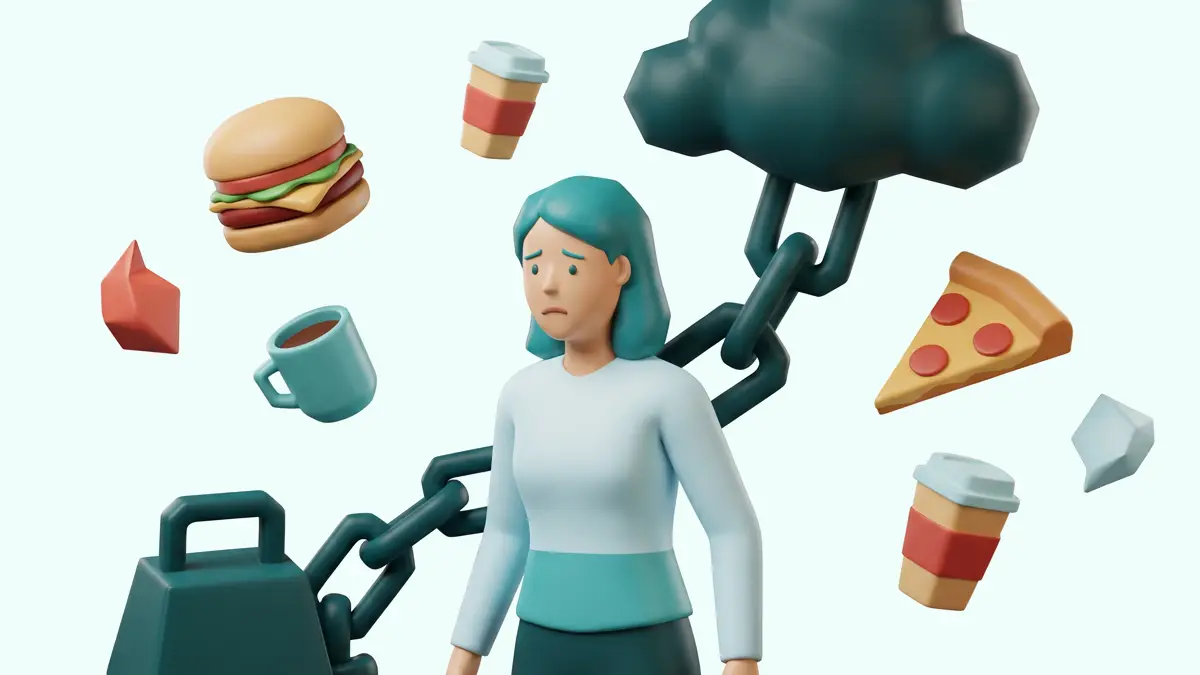
Woman between a heavy weight and a storm cloud, surrounded by snacks — emotional eating test

Most of us have been there: after a hard, stressful day at work, your hand reaches for a bar of chocolate or a bag of crisps almost on its own. It can feel like a simple lack of willpower, but the reality is different. Emotional eating is not a character flaw or ordinary laziness — it is a deeply rooted, if destructive, psychological way of coping with stress. We eat not because the body needs calories, but because we are trying to “feed” our emotions : anxiety, loneliness, sadness, anger or even everyday boredom.

Why does stress push us toward food?

The biology of this process is clear and tied to our hormone system. Under stress, the body releases a large amount of cortisol. That evolutionary response prepares us for fight or flight and signals the brain that survival needs quick energy. That is why, under pressure, we do not crave broccoli, carrots or salad — we want carbohydrates, sugar and fat.

Research from the American Psychological Association (APA) shows that nearly 40 percent of adults regularly overeat or choose unhealthy food simply to cope with stress. Mental health professionals worldwide also note a close link between chronic stress , workplace burnout and episodes of emotional overeating. After eating starchy or sweet food, the brain releases dopamine — the “feel-good” chemical. That brings a brief, powerful sense of calm. The euphoria lasts only a few minutes, though, and is followed by guilt, shame and even more anxiety, because the original source of stress has not gone anywhere.

Physical vs emotional hunger: how to tell them apart

To break this cycle, you first need to learn your body’s signals. Clinical psychology practice highlights several key differences between natural and emotional hunger.

Physical hunger builds gradually. You first notice a light emptiness in the stomach that slowly grows until it is hard to ignore. In that state you are open to many food options — even a simple soup or an apple can look appealing. Emotional hunger, by contrast, hits suddenly. It is more like an impulse that demands a specific “comfort” food here and now.

Another important difference is how fullness is perceived. When eating for physical hunger, we stop once the stomach feels full. Emotional eating often runs on autopilot. Someone can sit in front of the television and finish huge portions without really tasting the food. How you feel afterwards also differs: satisfying physical hunger brings contentment; an emotional eating episode almost always ends in heaviness and disappointment in yourself.

The role of loved ones: why control does not work

This pattern affects not only the person who eats, but those around them too. Living with someone who clearly struggles with emotional eating often makes relatives want to take over — hiding sweets, commenting on portion sizes, counting calories or criticising rising weight.

Psychologists stress that this approach is highly damaging. Any criticism or shaming only raises the person’s stress, which in turn fuels an even stronger urge to dampen those emotions with food. What loved ones most need to understand is that food here is a symptom, not the core problem. Instead of focusing on what is on the plate, try to hear what emotional overload the person is carrying, and offer support without judgement.

Mindful eating as an antidote to emotional overeating

One of the most effective ways to rebuild a healthier relationship with food is mindful eating. The approach encourages you to return full attention to the act of eating and relearn how to listen to your body.

Mindful eating starts with a small pause. Before you open the fridge or pick up a snack, stop for ten seconds and ask yourself: what am I feeling right now? If the answer is “tired,” “anxious” or “angry,” try another, non-food way to discharge that emotion. Step outside for a short walk, write your thoughts in a journal, call a friend, or simply drink a glass of water.

If you do decide to eat, do it consciously. Switch off the television and put the phone aside. Focus on the food’s colour, smell, texture and taste. Chew slowly. The brain needs roughly 20 minutes to register the fullness signal from the stomach. Eating slowly and mindfully, you feel satisfied sooner, consume less food, and — most importantly — reclaim the pleasure of eating without leaving room for guilt.

Where to begin changing

Learning to separate the body’s real needs from emotional impulses is not easy. Because deep psychological mechanisms are involved, it often takes time and support from specialists — for example, practitioners of cognitive behavioural therapy (CBT). Any recovery, though, starts with openly recognising the problem. If you are unsure about your own habits or a family member’s, and want to know whether food has become the only tool for coping with stress, the emotional eating test can help you assess the situation more objectively. Once you understand what drives the behaviour, you can take the first step toward freedom from emotional hunger.

Sources

  • American Psychological Association (APA) — research on how stress shapes eating habits and emotional overeating.
  • Harvard Medical School — applying mindful eating methods in healthcare settings.
  • General cognitive behavioural therapy (CBT) practice in the treatment of eating disorders.
Adult ADHD test: illustration of attention and hyperactivity symptoms
Psychology

ADHD in Adults: Symptoms, Causes, and How to Recognise It

Adult ADHD can hide behind dozens of open tabs, unfinished projects, and constantly misplaced keys. Learn the main signs, causes, and next steps.

Read article
Emotional burnout test: illustration of professional exhaustion and chronic stress
Psychology

Burnout: Warning Signs, How It Differs from Stress, and What to Do

Is a restful weekend no longer enough, while Monday morning already fills you with apathy? Distinguishing temporary fatigue from burnout is the first step towards preventing severe exhaustion.

Read article

Another discovery

Want another discovery?

If you’re still unsure where next — let chance pick an unexpected test for you.

One tap — one unexpected test.