

Skip to content

Good to know

Shopping Psychology: Why We Spend Money on Things We Do Not Need

Author: The Tester.lt team

Shopping habits are not simply a failure of willpower. Learn which cognitive biases and principles of behavioural economics shape your financial decisions.

Key takeaways

  • Research by Nobel laureate Daniel Kahneman shows that the brain uses two systems: a fast (emotional) one and a slow (analytical) one. Most purchases happen under the influence of the fast system.
  • Impulse buying is not a simple lack of willpower — it is a reaction to stress, social pressure or marketing “anchors”.
  • People can be grouped into four financial behaviour types: emotional, social, bargain hunter and rational.
  • Once you understand your weak spots, you can introduce “cognitive friction” — artificial obstacles that pause the impulse and give logic time to catch up.
Shopping habits test: financial psychology and spending decisions

We have all been there: you get home after shopping, pull something out of the bag and almost immediately feel guilty. We like to believe we spend money logically and carefully, but behavioural economics paints a different picture. At the checkout or in an online store, most decisions are made not by rational thought, but by subconscious cognitive mechanisms , evolutionary instincts and emotion.

Four shopper types: what really controls your wallet?

Different people respond to different psychological triggers. While one person spends half a month’s salary on a luxury watch for status, another buys three unnecessary jumpers simply because they carried a 70% discount.

1. The emotional shopper (dopamine trap)

For this type, financial decisions are driven directly by how they feel inside. Shopping becomes a quick source of dopamine — the pleasure hormone. When someone feels stress , anxiety, fatigue or sadness, the brain demands a fast reward. Hitting “Buy” brings instant relief, but the euphoria fades the moment the item arrives.

  • What to do: apply the HALT rule ( Hungry, Angry, Lonely, Tired). If you feel any of these states, postpone the purchase until the next day. It also helps to convert the price into hours of your pay: “Is this jumper really worth ten hours of my work?”
  • What to avoid: saved card details linked to online shops and your phone. The easier the checkout, the faster emotion wins.

2. The bargain hunter (anchoring effect)

Bargain hunters are convinced they are being highly rational, so they usually avoid paying full price. In behavioural economics, though, this pattern is closely tied to the anchoring bias used in online marketing psychology . When you see a starting price of €100 crossed out to €40, the brain locks onto €100 as the anchor. It feels as if you “earned” €60 — when in reality you simply spent €40 on something you never planned to buy.

  • What to do: run a zero-base test. Seeing an item with a red tag, ask yourself: “If this had always cost €40 and there had never been a sale, would I still buy it today?”
  • What to avoid: browsing shops — physical or online — without a clear purpose, or simply out of boredom. Without an exact shopping list, sale sections are financially risky territory.
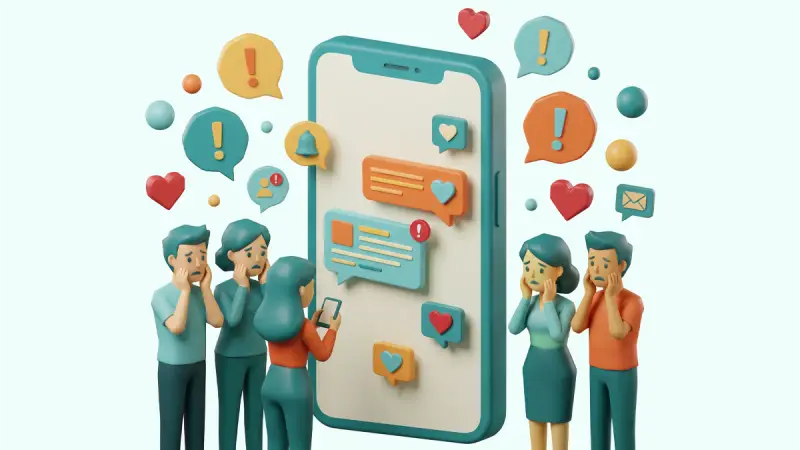

3. The social (image) shopper (fear of falling behind)

This type’s spending is shaped by the outside world — friends, colleagues and social media. The social shopper buys not the function of an item, but status, a sense of belonging or an image. It is a powerful evolutionary instinct (fear of being cast out of the tribe) that in the modern world has become FOMO (Fear Of Missing Out).

  • What to do: try a 72-hour (three-day) pause. When you see something you “must have because everyone has it,” do nothing for three days. The initial social impulse fades, and logic can assess whether the item truly has lasting value in your life.
  • What to avoid: following influencers and brands on social media if you notice that their content leaves you dissatisfied with your life or the things you already own.

4. The rational analyst (analysis paralysis)

This is the rarest type. These people do not fall for the magic of sales and rarely buy on emotion. Before opening their wallet, they carefully compare alternatives, read dozens of reviews and hunt for the best possible option.

  • What to do: keep a “fun budget” — a small, fixed amount you allow yourself to spend each month with no logic or analysis at all, purely for enjoyment. It helps maintain a healthy, less tense relationship with money.
  • What to avoid: cognitive fatigue from tiny decisions. If an item costs little (say, €15), do not spend two hours reading reviews. Your time and psychological energy are worth more than a few euros saved.

Managing personal finances takes more than logging expenses. You need to understand why you spend. Take the free shopping habits test , assess which psychological mechanisms shape your decisions and start managing your money — instead of letting it manage you.

Sources

  • Kahneman, D. (2011). Thinking, Fast and Slow. (Foundational work in cognitive psychology on fast and slow thinking).
  • Thaler, R. H. (2015). Misbehaving: The Making of Behavioral Economics. (Nobel laureate’s book on irrational consumer behaviour).
  • Ariely, D. (2008). Predictably Irrational: The Hidden Forces That Shape Our Decisions. (Anchoring, social norms and the role of emotion in consumption).
Digital addiction and FOMO test: people looking at a smartphone surrounded by notification icons
Lifestyle

Digital Fatigue and FOMO: What Really Controls Your Attention?

For most of us the day starts the same way: the alarm goes off and, still in bed, we reach for the phone. We check social media, news sites and email. We tell ourselves we just want to catch up on overnight news. Behind that innocent morning habit, though, often sits a deeper psychological mechanism — the fear of missing out, better known as FOMO.

Read article
Procrastination types test: putting tasks off and time-management habits
Lifestyle

Why Do We Put Things Off? 4 Types of Procrastination and How to Overcome Them

Procrastination is not laziness — it is an emotion-regulation problem. Learn your delay type (perfectionist, dreamer, worrier or deadline-chaser) and how to change it.

Read article

Another discovery

Want another discovery?

If you’re still unsure where next — let chance pick an unexpected test for you.

One tap — one unexpected test.