
Skip to content

Good to know

Energy-Draining Habits: Everyday Routines That Exhaust You

Author: The Tester.lt team

Fatigue and low motivation do not always come from stress alone. Learn how digital escapism and background noise deplete your energy.

Key takeaways

  • Constant use of smart devices creates a dopamine deficit that leads to apathy and background anxiety.
  • The brain needs quiet and boredom to activate the Default Mode Network, which helps regulate emotions.
  • Caffeine and sugar do not remove fatigue—they only temporarily mask signals of physical exhaustion.
  • Digital communication does not meet the evolutionary need to regulate stress through live contact and body language.
Modern habits test: digital escapism and energy-draining routines

Many people today face a paradoxical situation: they sleep eight hours, do no heavy physical work, yet wake up with a deep sense of inner fatigue. For a long time this feeling was linked exclusively to burnout at work or major crises. The rapidly growing field of lifestyle psychiatry, however, offers a different perspective. What drains our emotional health and motivation is not only big life shocks, but also unnoticed, automated daily habits: constant information consumption, background noise and superficial connection.

Digital escapism and the dopamine trap

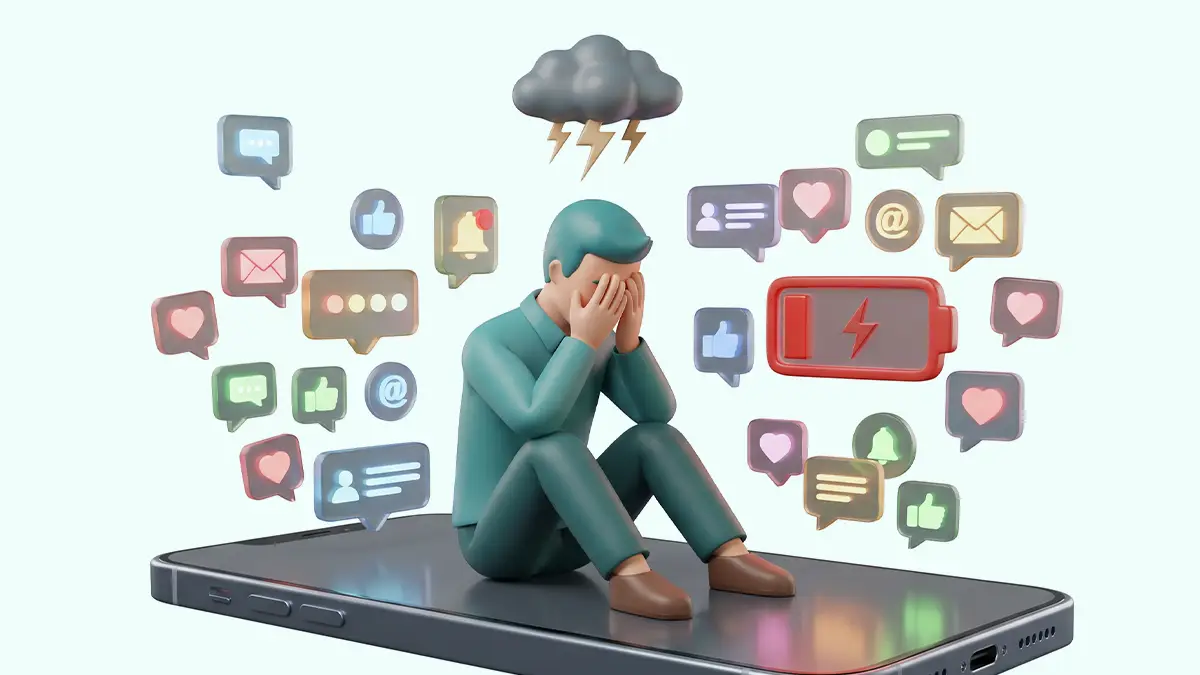
One of the most widespread modern habits is unlocking the phone at the slightest boredom, anxiety or discomfort. Stanford psychiatry professor Dr. Anna Lembke’s research shows how this behaviour throws our reward system off balance. Social media , short videos and a constant news stream deliver a quick dopamine dose that requires almost no effort.

Over time the brain adapts to this unnaturally high level of stimulation and reduces natural dopamine production. That deficit is exactly what makes slower everyday tasks—reading a book, a long conversation, a work project—feel unbearably boring. Scrolling becomes a form of escapism: an attempt to flee your own thoughts that, in the long run, only increases anxiety.

How to regain control: Create strict tech-free zones. The most effective step is to stop using your phone for the first hour after waking and the last hour before sleep. Let your nervous system wake and prepare for rest without artificial stimuli.

Cognitive noise and lost silence

Today’s culture pushes constant productivity, so every empty moment is filled with background noise. We listen to podcasts while tidying, play music while running, and leave the TV on while working. Neuroscientist Dr. Marcus Raichle showed that when the brain is at rest (not focused on any external task), the so-called Default Mode Network switches on.

This network is vital. It processes the day’s events, consolidates memory, solves creative problems and helps integrate emotions. By constantly bombarding the brain with external information, we block this natural reboot mechanism. The result is an overstimulated nervous system that shows up as irritability, difficulty concentrating and poor sleep quality .

How to regain control: Practise intentional boredom. Start small: take a fifteen-minute walk without headphones, drive with the radio off, or drink your morning coffee looking out the window instead of at a screen.

Neglecting the biological foundation

Physical condition directly shapes psychological wellbeing. Modern work styles lead to a long-term sedentary lifestyle indoors. Without enough natural daylight, the circadian rhythm that governs melatonin (sleep hormone) and cortisol (alertness hormone) release is disrupted.

When energy drops, people usually reach for quick fixes—caffeine and sweets. These substances do not provide real energy. Caffeine blocks fatigue receptors in the brain, artificially forcing the body to use its reserves. When the stimulant wears off, an even deeper energy drop (a crash) follows, pushing you to repeat the cycle.

How to regain control: Rebuild connection with natural biological rhythms. Morning natural light (at least 10–15 minutes outdoors in the first half of the day) is one of the most powerful tools for resetting the circadian rhythm. Treat physical movement not as a chore, but as a necessary way to burn accumulated stress.

Emotional isolation and superficial connection

Technology has created the illusion that we are more connected than ever. Convenience means live meetings and long phone calls are replaced by short text messages, reactions to photos or social-media comments.

Human evolution is grounded in community. Polyvagal theory, developed by Dr. Stephen Porges, explains that our nervous system calms and feels safe only through co-regulation. That requires eye contact, voice tone, facial expression and physical presence. Text communication does not transmit these biological signals. Someone can have hundreds of virtual friends and still have a nervous system that registers deep loneliness—triggering inflammatory processes in the body at the same level as chronic stress .

How to regain control: Prioritise quality over quantity. Initiate live meetups with the people closest to you—with no phones on the table. If meeting is impossible, replace text messages with voice calls.

Fatigue and low motivation are usually a natural, logical response to a routine that does not suit the body. Changing just a few small daily actions can meaningfully improve quality of life. After taking the free modern habits test , you may more clearly identify which area of daily life needs the most attention and find a direction toward more sustainable psychological balance.

Sources

  • Lembke, A. (2021). Dopamine Nation: Finding Balance in the Age of Indulgence. (A detailed neuroscience analysis of the dopamine system, digital addiction and escapism.)
  • Raichle, M. E. (2015). The Brain's Default Mode Network. Annual Review of Neuroscience. (Scientific foundation for the importance of the brain’s default mode in rest and information processing.)
  • Porges, S. W. (2011). The Polyvagal Theory: Neurophysiological Foundations of Emotions, Attachment, Communication, and Self-regulation. (On co-regulation and how live social contact calms the nervous system.)
  • Walker, M. (2017). Why We Sleep: Unlocking the Power of Sleep and Dreams. (On circadian rhythms, caffeine and the physical foundations of psychological resilience.)
Digital addiction and FOMO test: people looking at a smartphone surrounded by notification icons
Lifestyle

Digital Fatigue and FOMO: What Really Controls Your Attention?

For most of us the day starts the same way: the alarm goes off and, still in bed, we reach for the phone. We check social media, news sites and email. We tell ourselves we just want to catch up on overnight news. Behind that innocent morning habit, though, often sits a deeper psychological mechanism — the fear of missing out, better known as FOMO.

Read article
Procrastination types test: putting tasks off and time-management habits
Lifestyle

Why Do We Put Things Off? 4 Types of Procrastination and How to Overcome Them

Procrastination is not laziness — it is an emotion-regulation problem. Learn your delay type (perfectionist, dreamer, worrier or deadline-chaser) and how to change it.

Read article

Another discovery

Want another discovery?

If you’re still unsure where next — let chance pick an unexpected test for you.

One tap — one unexpected test.