
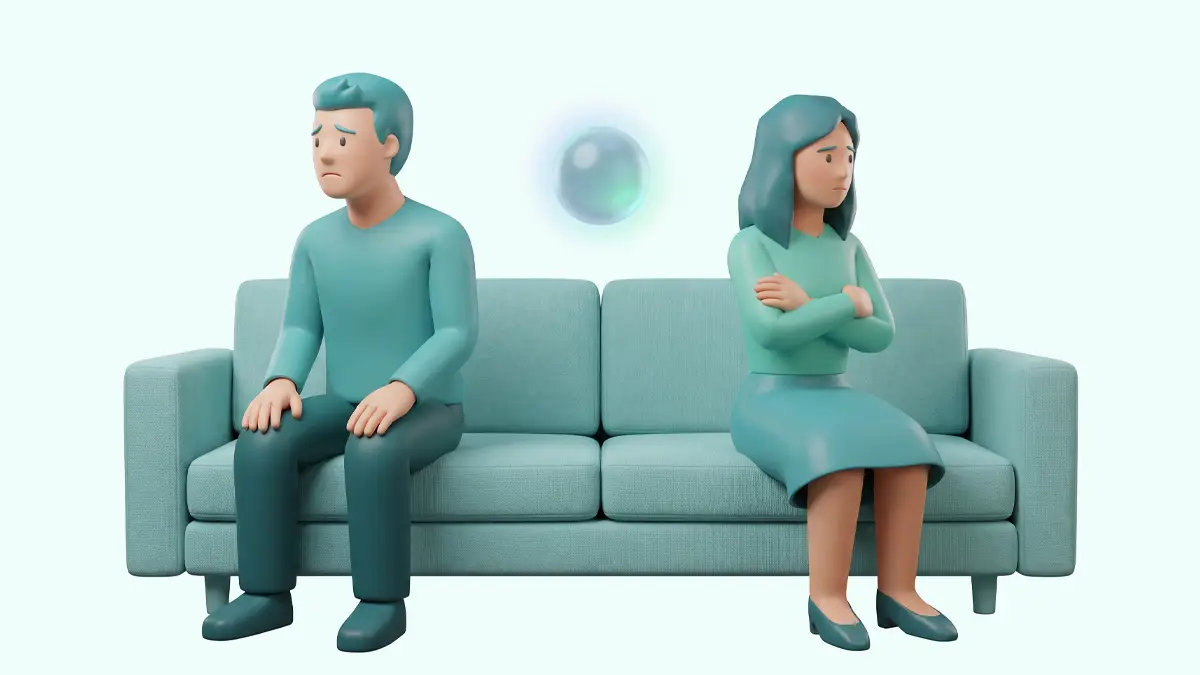
Most long-term couples eventually reach a stage when everyday life feels predictable and the early excitement settles into stability. Sometimes that calm drifts into emotional indifference: conversations shrink to chores and money, time as a couple disappears, and being near your partner brings tension and fatigue. When small frictions and unspoken expectations pile up for months, the couple faces relationship cooling and couple burnout.
Routine or relationship burnout: how do you recognise the line?
Household routine and deep emotional distance are not the same thing. Routine is a natural part of a long-term bond — it can bring safety and predictability. Even strong couples have periods when work load, parenting, or other commitments temporarily pull attention away from each other.
Couple burnout (also called relationship burnout), studied in depth by psychologist Dr. Ayala Malach Pines, is a different state. It is physical, emotional, and mental exhaustion that grows from a long mismatch between expectations and reality. When someone continually feels undervalued, unheard, and lonely while together, the psyche starts protecting itself through withdrawal. A burned-out partner stops investing because they feel apathy inside and no longer believe conversation can change anything. For more on emotional withdrawal, see emotional availability in relationships .
The emotional bank account according to Dr. J. Gottman
University of Washington professor Dr. John Gottman spent four decades studying thousands of couples to learn what predicts relationship success or breakdown. His team found that thriving couples continually top up what he calls the emotional bank account.
In daily life, partners send each other small invitations to connect (bids for connection ) — sharing a moment from the day, joking, asking for help, or a brief touch in passing. In strong relationships those bids are met with attention and engagement. In cooled relationships they are systematically ignored (for example, eyes never leave the phone) or met with irritation. That indifference slowly drains the trust reserve and builds an invisible wall of distance.
Four of the most dangerous communication traps in a couple
Dr. J. Gottman’s research identified four destructive communication patterns that most strongly erode emotional safety and predict relationship crisis. They also connect to broader conflict resolution styles :
1. Character criticism
- How it shows up: a constructive complaint names a specific situation; criticism attacks the partner’s character and personality. Sentences lean on absolutes — “you always,” “you never” — or digs at personal traits.
- Impact: constant criticism makes someone feel attacked and unaccepted. It blocks agreement on a concrete household issue and deepens resentment.
2. Defensiveness and blame-shifting
- How it shows up: an automatic response to criticism in which a person refuses to own even a small share of responsibility. Instead of listening, they excuse themselves, play the victim, or counter-attack by dredging up the partner’s old mistakes.
- Impact: defensiveness signals that the partner’s feelings in the conversation do not matter. Conflict becomes a contest over who is right, so the real problem stays unsolved.
3. Contempt and devaluation
- How it shows up: the most damaging pattern — sarcasm, cynical remarks, ridicule, eye-rolling, or an open display of superiority.
- Impact: contempt directly destroys mutual respect and emotional safety. In couples where this tone takes hold, partners start to see each other as opponents.
4. Stonewalling
- How it shows up: when conflict or tension rises, one partner cuts contact entirely — stops talking, does not answer questions, looks away, or leaves the room. It often follows emotional flooding, when the nervous system can no longer process the stress.
- Impact: silence may help the withdrawing person calm down, but for the other it creates a strong sense of helplessness, rejection, and loneliness.