You meet a wonderful person. Conversation flows easily, time together feels good, and attraction grows. But the moment your partner shows they want something more serious—or tries to talk about deep feelings—something inside you shuts down. Instead of joy you feel anxiety and an urge to pull away, and the person suddenly seems less appealing. Such situations are often blamed on a “lost spark” or the belief that this simply “isn’t the one.” Behind this scenario, however, there is often a deeper cause: your own emotional unavailability.
Emotional availability and fear of commitment: what lies behind these walls?
Society spreads the myth that people who fear commitment are cold, selfish, or simply unable to love. Reality is quite different. Emotional unavailability is not a lack of feelings. It is a strong, unconscious defence mechanism.
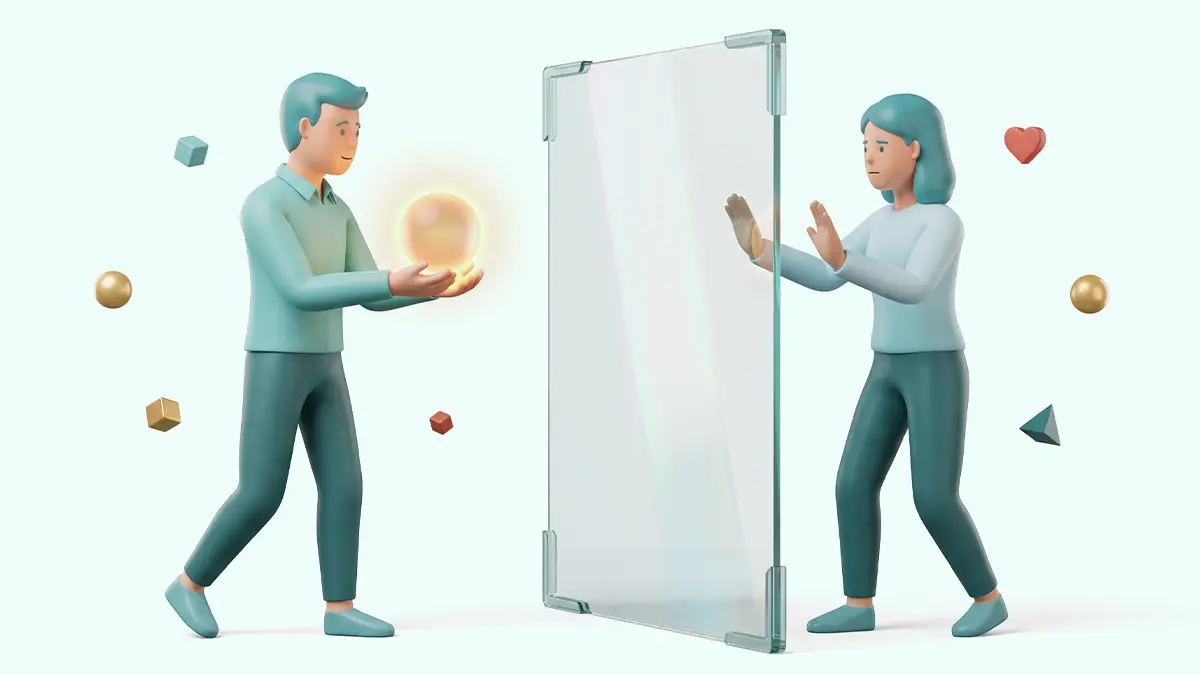
Such people often sincerely want love and warmth, yet emotional closeness itself feels like a huge threat. Dropping their armour and showing vulnerability registers as a danger signal. The brain sends a message: if you let yourself attach, you will be rejected, hurt, or you will lose your freedom. So as soon as real intimacy becomes possible, the survival instinct kicks in—flee or build walls. This pattern often links to an avoidant attachment style .
Signs of emotional unavailability: how to recognise yourself
Invisible walls in relationships are rarely built on purpose. Most of the time a person does not realise they are sabotaging the bond and finds very logical excuses for pulling away. Here are the main signals of emotional distance:
- Constant fault-finding. While someone is unavailable, they seem ideal. But as soon as the relationship becomes close, you start noticing small, irritating details: how they chew, how they dress, the words they use. This sudden “cooling” is a brain trick that justifies the urge to escape closeness.
- Walls of silence during conflict. When a disagreement arises, the emotional instinct is to withdraw. Instead of saying what hurt you, you shut down, ignore your partner, and punish them with silence. Conversations about feelings feel too exhausting. If conflicts get stuck quickly, it also helps to look at conflict-resolution styles .
- Choosing unavailable partners. Paradoxically, emotionally unavailable people often fall for those who cannot offer stability. They are often drawn to married, emotionally cold, or distant partners. Why? Because it feels safe. The unconscious knows these relationships will never reach a deep, binding level—so true vulnerability never has to be faced.
- Discomfort with another person’s feelings. When a partner wants a hug, offers a compliment, or openly declares love, you feel uneasy. You may want to laugh it off, change the subject, or even leave the room.
Why do we build emotional walls in relationships?
The tendency to keep distance does not appear from nowhere. Most often it echoes past experiences—painful earlier breakups or childhood. If your emotional needs were ignored while growing up, or if you learned that honesty brought only pain and criticism, you absorbed a lesson: showing feelings is unsafe.
In adulthood this learned pattern remains. You become highly independent, rely only on yourself, and outwardly look unbreakable. But isolation has a cost—it steals the chance of an authentic, trust-based partnership. Sometimes something else hides behind “unavailability”: when one partner takes on all the emotional labour, there is a risk of codependency . And if withdrawal turns into control or manipulation, it is worth remembering the signs of toxic relationships .