
Skip to content

Good to know

Highly Sensitive Person (HSP): How to Recognise a Sensitive Nervous System

Author: The Tester.lt team

Do noise, crowds, and strong emotions from others drain you quickly? Learn how a highly sensitive nervous system works — and take the test to gauge your sensitivity level.

Key takeaways

  • A highly sensitive person (HSP) has a nervous system that processes outer and inner stimuli more deeply and in more detail.
  • Heightened sensitivity affects roughly one in five people and shows up as stronger reactions to noise, lights, fabrics, or emotions.
  • Sensory sensitivity shares features with neurodivergent conditions, so seek mental-health support if difficulties persist.
  • Once you recognise these traits, learn to set boundaries and regularly give your nervous system quiet recovery time.
Highly sensitive person (HSP) test: sensitive nervous system, sensory processing, and emotional receptivity

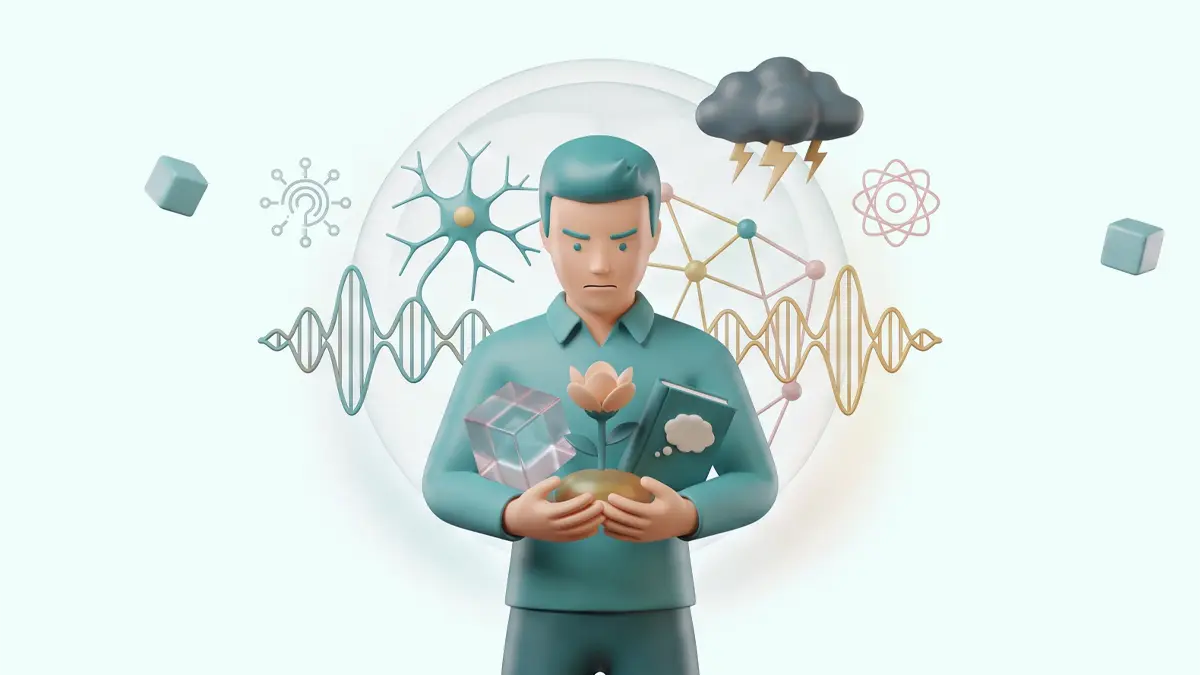
An intense, unpredictable world does not affect everyone the same way. Some people work in open offices without distraction and enjoy constant bustle, while the same noise leaves others exhausted, irritated, or even physically uncomfortable. Those reactions are often mislabelled as shyness, fatigue, or social anxiety. In the 1990s, psychologist Elaine Aron defined the pattern as sensory processing sensitivity. People with this innate trait are called highly sensitive persons (HSPs). Their nervous system works like a precise radar, constantly registering even the smallest shifts in the environment.

What is sensory processing sensitivity?

Every moment, the brain filters millions of stimuli: street sounds, colleagues’ perfume, flickering light, or someone else’s body language. In people with a lower sensitivity threshold, the nervous system runs that information through a much denser “filter.” They absorb and analyse far more detail than most people around them.

Because of that deep processing, highly sensitive people reach overstimulation much sooner. When the information flow becomes too large, the brain cannot organise it in time, and an urgent need to withdraw into quiet appears. That is why sensitive people can feel completely depleted after a shopping centre, a long meeting, or an intense social event — even when they did nothing physically demanding.

The DOES model: how to recognise HSP traits

Elaine Aron summarised highly sensitive traits with the acronym DOES, which makes it easier to recognise this nervous-system pattern:

  • D – Depth of processing. Sensitive people analyse information thoroughly. Before deciding, they weigh many possible consequences, lean toward deep reflection, and rarely act on pure impulse.
  • O – Overstimulation. Because so much information is being processed, the nervous system tires quickly. Multitasking, time pressure, or being watched can create intense tension and sharply reduce performance.
  • E – Emotional reactivity and empathy. Highly sensitive people absorb others’ moods fast. Walking into a room, they immediately sense tension, anger, or sadness. They also experience art, music, and nature deeply — and are often deeply moved by films.
  • S – Sensing the subtle. They notice what others miss: tiny temperature shifts, scratchy clothing labels, subtle flavours, and the moment someone’s tone of voice changes.

HSP, introversion, and neurodiversity: where is the line?

Society long treated high sensitivity as the same thing as introversion. About 70 percent of highly sensitive people are introverts, but the remaining 30 percent fit an extravert profile. An extraverted HSP may enjoy socialising, new connections, and parties — yet still needs a long stretch of quiet afterward to recover.

The broader clinical context matters too. Heightened sensory sensitivity, trouble filtering background noise, and emotional reactivity share features with neurodivergent conditions such as autism or ADHD. Psychology is still debating how to separate personality sensitivity from neurobiological differences. If environmental sensitivity fuels ongoing anxiety or interferes with work and relationships, seek mental-health support. A professional assessment helps rule out other causes and points you toward targeted help.
How to manage your energy in an intense world

If you recognise these traits in yourself, the most important step is to stop comparing yourself with less sensitive people and adapt daily life to what your nervous system needs.

  • Adapt your physical environment. Use sensory supports: noise-cancelling headphones in an open office, dimming curtains at home, and comfortable clothing made from natural fabrics. When tension, irritability, or focus trouble rises, step away. Five minutes with closed eyes in a calm setting helps the nervous system cool down.
  • Set personal boundaries. Communicate your needs clearly. You do not have to attend every gathering or reply to messages instantly. When planning your week, leave recovery windows after intense days so you avoid emotional burnout.
  • Allow time for deep processing. Because your brain runs through many scenarios and subtle details, give yourself quiet reflection after hard decisions or conflicts. Avoid major choices under time pressure.

Treat your sensitivity as a strength — it helps you notice detail, form deep connections, and experience the world richly, as long as you protect your energy. Does your nervous system really react more strongly than most? Take the free highly sensitive person test . With 15 everyday situations, you can gauge your sensory receptivity and learn which recovery habits fit you best.

Sources

  • Aron, E. N., & Aron, A. (1997). Sensory-processing sensitivity and its relation to introversion and emotionality. Journal of Personality and Social Psychology, 73(2), 345–368.
  • Acevedo, B. P., et al. (2014). The highly sensitive brain: an fMRI study of sensory processing sensitivity and response to others' emotions. Brain and Behavior, 4(4), 580–594.
Adult ADHD test: illustration of attention and hyperactivity symptoms
Psychology

ADHD in Adults: Symptoms, Causes, and How to Recognise It

Adult ADHD can hide behind dozens of open tabs, unfinished projects, and constantly misplaced keys. Learn the main signs, causes, and next steps.

Read article
Emotional burnout test: illustration of professional exhaustion and chronic stress
Psychology

Burnout: Warning Signs, How It Differs from Stress, and What to Do

Is a restful weekend no longer enough, while Monday morning already fills you with apathy? Distinguishing temporary fatigue from burnout is the first step towards preventing severe exhaustion.

Read article

Another discovery

Want another discovery?

If you’re still unsure where next — let chance pick an unexpected test for you.

One tap — one unexpected test.