
Skip to content

Good to know

Communication Styles and Passive Aggression: How to Recognise Them and Set Boundaries

Author: The Tester.lt team

Dealing with sarcasm, silence, or struggling to say “no”? Learn the four communication styles, what drives passive aggression, and take the free test.

Key takeaways

  • Psychology describes four main communication models: assertive, passive, aggressive, and passive-aggressive.
  • Passive aggression is an indirect expression of hostility or dissatisfaction through sarcasm, silence, hints, or deliberately delaying agreements.
  • Passive-aggressive behaviour most often comes from fear of open conflict and difficulty defending personal boundaries directly.
  • The most sustainable relationships at work and in a couple rest on assertiveness — calmly and clearly naming your position without harming the other person’s dignity.
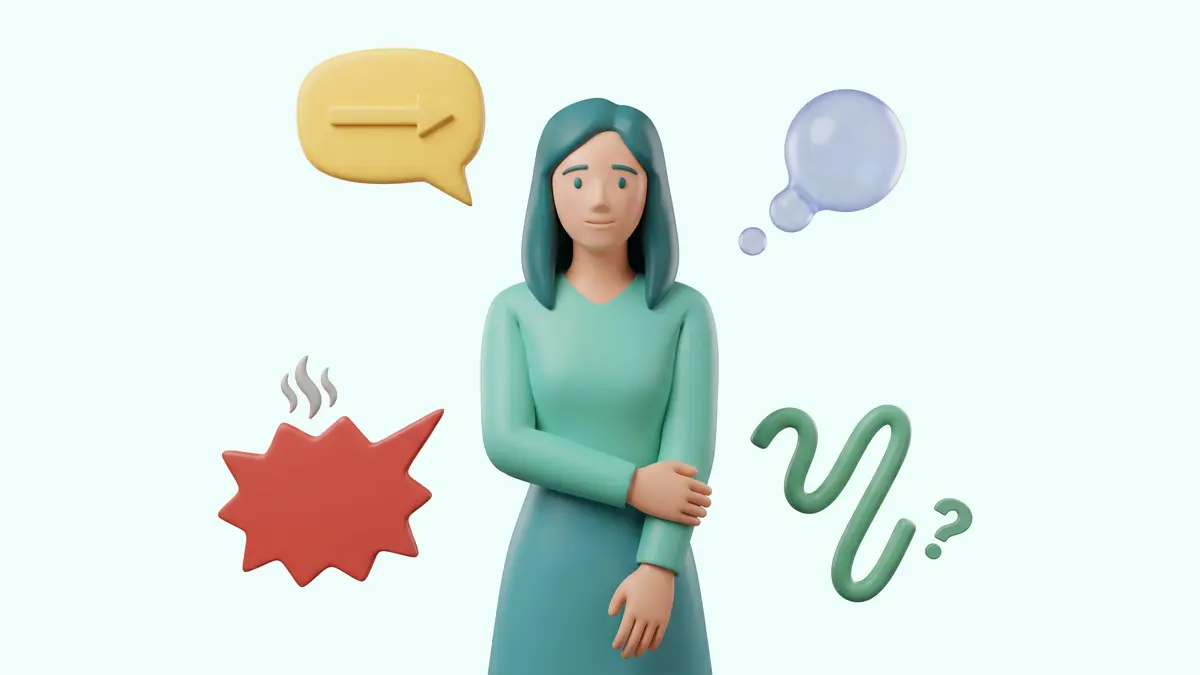
Person between speech, anger, confusion, and calm-thought symbols — communication styles and passive aggression

You ask a colleague to send an urgent report. Smiling, they promise to do it — yet the document never arrives that day or the next morning, and when asked they calmly say they “just did not manage because of other work”. A similar dynamic often shows up at home: you see your partner walking around frowning and slamming cupboard doors, yet when you ask what happened you get a cold “everything is fine, nothing happened”. In moments like these we meet passive aggression — one of the four communication styles psychology describes, shaping how we set personal boundaries , resolve disagreement, and express anger.

Four communication styles: how do we set boundaries?

Clinical psychologists Dr. Robert Alberti and Dr. Michael Emmons grouped people’s behaviour in conversation by how they balance their own needs with respect for the other person’s boundaries. Most people may use different models in different settings (for example with a manager at work and with family at home), yet one of the four styles is usually dominant. That also connects closely with how you behave during arguments and conflict .

1. Passive (accommodating) style

  • How it shows up: the person constantly puts others’ needs and outer peace above their own. Saying “no”, asking for help, or offering a different opinion feels hard. In conversation they give in quickly, apologise, and make excuses even when they are not at fault.
  • Impact: to others a passive person can seem very convenient and kind, yet over time they feel used, undervalued, and emotionally exhausted. If you recognise this pattern, it also helps to check your ability to say “no” .

2. Aggressive (pressuring) style

  • How it shows up: the main goal is to defend your interests at any cost and keep control of the situation. That means a categorical tone, raising your voice, interrupting, blunt criticism, or pressure.
  • Impact: in the short term it can win the result and force compliance, but over time it breeds defensiveness, fear, and withdrawal. When pressure becomes systemic, it often borders on toxic relationship dynamics.

3. Passive-aggressive style

  • How it shows up: masked resistance — outwardly avoiding open conflict while expressing anger indirectly. Typical forms include sarcastic remarks (“I was only joking”), backhanded compliments, demonstrative silence, delaying responsibility, “forgetting”, or playing the victim.
  • Impact: passive aggression creates huge ambiguity and emotional fatigue. The other person feels hostility in the air yet cannot solve the problem, because the passive-aggressive person formally denies being angry at all. In a couple this weakens emotional availability .

4. Assertive (direct and respectful) style

  • How it shows up: the balance point between passivity and aggression. An assertive person names needs, expectations, and boundaries clearly, calmly, and directly — without humiliating, blaming, or pressuring the other person.
  • Impact: direct communication saves psychological energy, stops secret resentments from building, and creates safe, trust-based relationships in teams and families alike.


How passive accommodating turns into passive aggression

Psychology notes that passive accommodating and passive aggression are closely linked. Passive aggression rarely comes from bad intent — most often it is a learned self-protection habit formed in childhood or an authoritarian environment where open anger or saying “no” was punished.

When someone believes they have no right to set boundaries openly, they stay passive for a long time: agreeing to extra work, swallowing hurts, and trying to please everyone. Unspoken dissatisfaction does not disappear — it builds inside. When resentment hits a critical point and fear of an open talk remains, the tension breaks out as passive aggression: hints, coldness, sabotage, or a wall of silence.

How to build assertiveness and respond to passive aggression

Moving toward direct and respectful communication takes conscious practice — both changing your own habits and responding to others:

  • Use a three-part “I” message. Instead of blaming (“you interrupted me again”) or staying silently passive, name the fact, your state, and a concrete request: “When you interrupt me in a meeting, I lose my train of thought. Please let me finish the presentation, then we can take questions.”
  • Drop long excuses when you say “no”. Passive people often invent long stories to soften a refusal, which only leaves room for negotiation and pressure. A calm, short, clear “I will not be able to take that on this week” sounds firmer and more professional. More on this in the personal boundaries article .
  • Name passive aggression calmly, without anger. If a colleague or partner communicates with hints, sarcasm, or silence, do not join the game or answer with an attack. Calmly name what you see and hand responsibility back: “From your tone I hear this situation has annoyed you. Tell me straight what does not work for you so we can resolve it.”
  • Lock in concrete agreements. At work, when you meet passive-aggressive delay or “forgetting”, structure works best. After a verbal conversation, briefly confirm the agreement in writing with a clear task and deadline.
  • Draw a clear line with blunt aggression. If someone raises their voice, applies pressure, or turns to personal attacks, do not match that tone — and do not collapse either. Calmly pause the talk: “I want to resolve this, but we will continue when we can do it calmly and without a raised voice.”

Want to know which of the four communication styles dominates your everyday life and see your personal profile? Take the free communication style and passive aggression test . After 16 statements you will get a clear four-scale assessment and practical recommendations.

Sources

  • Alberti, R. E., & Emmons, M. L. (2017). Your Perfect Right: Assertiveness and Equality in Your Life and Relationships (10th ed.). New Harbinger Publications.
  • Wetzler, S. (1992). Living with the Passive-Aggressive Man: Coping with Hidden Aggression – From the Bedroom to the Boardroom. Simon & Schuster.
Big Five personality test: illustration of the five core personality traits
Personality

The Big Five: A Science-Based Personality Test

The Big Five, or OCEAN, is the leading research-based model of personality. Learn what openness, conscientiousness, extraversion, agreeableness, and neuroticism reveal.

Read article
Emotional intelligence (EQ) test: recognising and managing emotions
Personality

Emotional Intelligence (EQ): Why IQ Alone Is No Longer Enough

High intelligence can help you land your dream job, but emotional intelligence often decides whether you stay there, handle stress, and build lasting connections. Here’s why this skill matters for success.

Read article

Another discovery

Want another discovery?

If you’re still unsure where next — let chance pick an unexpected test for you.

One tap — one unexpected test.