
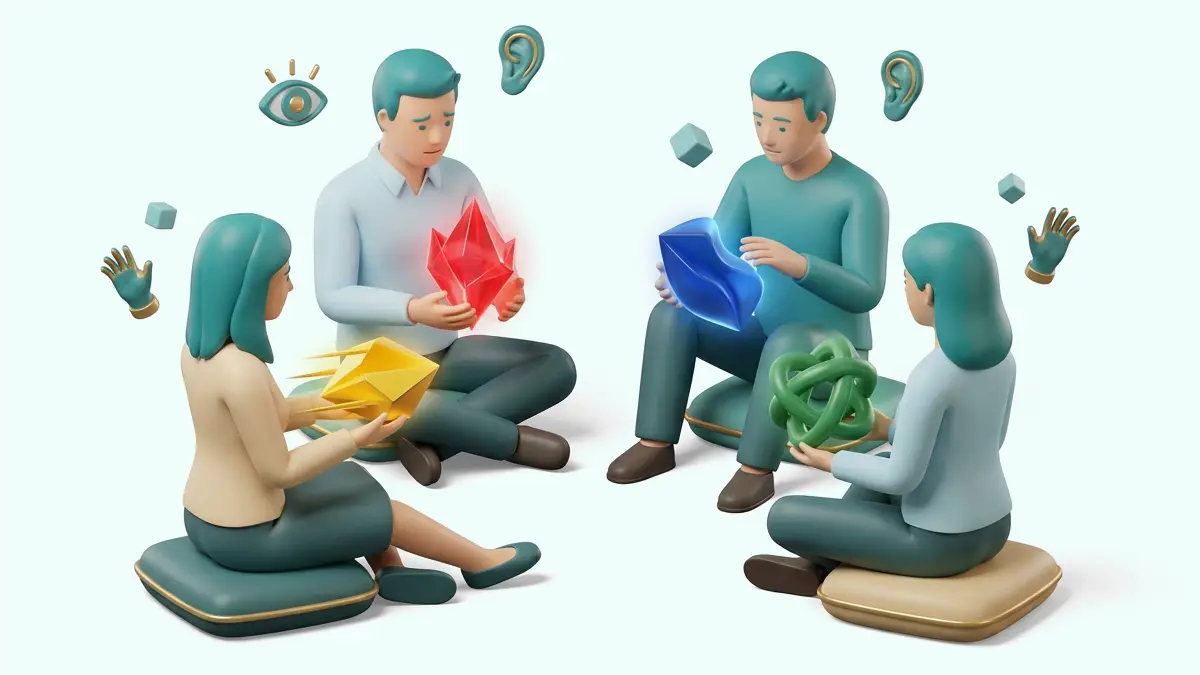
Watch people in stressful or unfamiliar situations and different behaviour patterns become obvious. Some take initiative at once and express emotion loudly; others adapt easily and joke; a third group waits calmly for clear instructions; a fourth withdraws to analyse possible risks in depth. Temperament — the biological foundation of personality — drives those differences. In antiquity, physicians Hippocrates and Galen sorted people into four categories: sanguine, choleric, phlegmatic, and melancholic. Modern science discarded the old explanations about bodily fluids, yet the four-type structure remains relevant and has been supported by modern neurobiological research.
Temperament and character: where is the difference?
In everyday speech, temperament and character are often used as synonyms, but in psychology they name different things. Temperament is innate. It depends on properties of the central nervous system and shapes behavioural dynamics: reaction speed, mobility, voice tone, and how strongly and how long we feel emotions. It is the form in which our behaviour appears.
Character is acquired. It forms across a lifetime through upbringing, social environment, personal experience, and conscious choices. Character describes a person’s values and outlook on work, other people, and the self. An impulsive choleric and a slow phlegmatic can both be equally honest, hard- working, and empathic — yet they will express those qualities at completely different tempos and styles.
H. Eysenck’s model: two axes that form four types
In the twentieth century, British psychologist Hans Eysenck joined classical temperament theory with modern psychometrics. He showed that the four older types are precisely explained by the interaction of two innate nervous- system dimensions:
- Extraversion and introversion. This axis shows where a person’s attention and energy are directed. Extraverts’ nervous systems need more outer stimulation, so they seek company, novelty, and active engagement. Introverts have naturally higher cortical arousal, so they avoid excess noise and regain energy in quiet.
- Emotional stability and reactivity (neuroticism). This dimension reflects how sensitive the autonomic nervous system is to stress. Emotionally stable people respond calmly to stimuli and return to balance quickly. Highly reactive people respond more strongly, become irritated or excited sooner, and their emotions last longer.
Where these two axes meet, four classical profiles form: sanguine (extravert, stable), choleric (extravert, reactive), phlegmatic (introvert, stable), and melancholic (introvert, reactive).
Four temperament types: strengths and challenges
Pure temperament types are extremely rare. Everyone carries traits of all four, yet one or two usually dominate. Explore each type’s pattern and how to keep inner balance.
1. Sanguine (lively and flexible)
How it shows up: energetic, optimistic, highly sociable people. They make connections quickly, adapt easily to new conditions, and can lift other people’s spirits. Sanguines think fast, enjoy variety, and bounce back from setbacks. Their main challenge is a tendency toward superficiality. When work becomes monotonous and needs long, careful effort, they lose interest quickly and may abandon projects halfway.
How to keep balance: sanguines benefit from building self-discipline and planning time. Large routine projects work better when split into short stages so a sense of dynamism remains. It also helps to pause before making promises and check whether there will be enough time and motivation to follow through.
2. Choleric (decisive and goal-oriented)
How it shows up: cholerics have great inner drive, ambition, and leadership qualities. They decide quickly, are not afraid of obstacles, and can mobilise others toward a shared goal. Because of a sensitive nervous system, though, their emotions are strong and sudden. Faced with slowness, inefficiency, or resistance, they flare up, become impatient and blunt, and risk emotional burnout if they work without breaks.
How to keep balance: the key task is learning to manage impulsive reactions. When irritation rises, a short pause before answering helps. Cholerics need to accept that other people work at a different pace and deliberately build rest breaks into the day.
3. Phlegmatic (calm and consistent)
How it shows up: emotionally stable, enduring, highly reliable people. Phlegmatics stay calm even in major crises; they like order, clear rules, and steady work. They dislike empty talk, listen well, and often keep the peace. Difficulty appears when the environment demands fast reactions or sudden change. They struggle to reorient quickly, tend to postpone decisions, and store unspoken emotions inside.
How to keep balance: these people benefit from communicating feelings and needs more openly so others do not take advantage of their patience. When change arrives, set concrete deadlines for decisions instead of endless delay.
4. Melancholic (analytical and empathic)
How it shows up: a melancholic nervous system is highly sensitive and processes information deeply. These people are observant, creative, careful, and hold high quality standards for themselves and others. They see detail, anticipate risk, and form deep emotional bonds. Outer chaos, noise, and harsh communication deplete them quickly. Melancholics react strongly to criticism, tend toward self-reproach, and analyse past mistakes for a long time.
How to keep balance: protect the nervous system by planning regular quiet alone time. Limit perfectionism and accept that mistakes are a natural part of progress. If deep reflection turns into constant anxiety or insomnia, consult a mental-health professional.